In demanding industrial environments, the durability of your equipment is the backbone of your operation. When machinery faces the relentless assault of friction, heavy impact, and constant scraping from abrasive materials like rock, gravel, coal, and ore, standard steel simply fails too soon. This premature wear leads directly to crippling downtime, excessive maintenance costs, and a constant drain on resources. The proven answer to this challenge is Abrasion Resistant Steel Plate—known throughout the industry as AR plate or wear plate. This high-performance material is specifically engineered and heat-treated to drastically extend the service life of critical components, ensuring your operations run efficiently, reliably, and profitably.
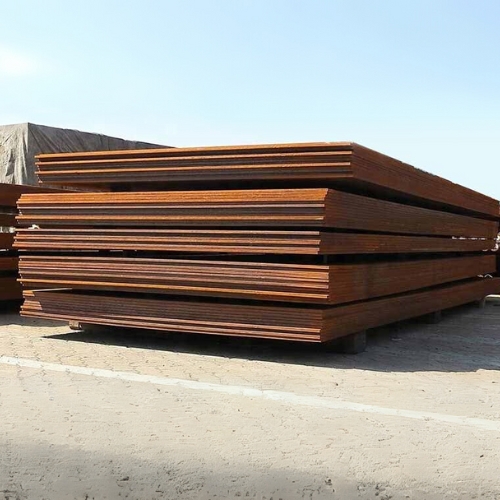
The superior performance of Abrasion Resistant Steel Plate is a result of meticulous engineering and metallurgy. We leverage deep, verifiable knowledge in steel processing to deliver a product whose properties are guaranteed to meet the rigorous demands of the field.
The key to AR plate’s resilience lies in the Quenched and Tempered (Q&T) heat treatment. This process is complex, but its effects are simple: maximum hardness coupled with necessary toughness.
Quenching and Tempering: How AR Steel Gets Its Strength
Quenching: The steel is heated to high temperatures and then rapidly cooled. This creates a hard, fine-grained internal structure (martensite) that resists surface deformation and wear.
Tempering: The steel is then carefully reheated to a specific lower temperature. This step relieves internal stress and significantly boosts the material’s toughness and high-impact resistance, preventing brittleness or cracking under heavy loads.
This process ensures the protection is not merely a surface layer but a through-hardened property, maximizing extended service life. This superior processing is why our Abrasion Resistant Steel Plate stands out.
The effectiveness of any AR plate is measured by its Brinell Hardness Number (BHN). Higher BHN values indicate greater resistance to gouging and abrasive wear.
Our quality is validated through complete Mill Test Reports (MTRs), documenting and verifying the certified hardness of every plate. This transparency ensures you are always sourcing a product with fully assured performance characteristics—crucial when investing in Abrasion Resistant Steel Plate.
Choosing the right grade of Abrasion Resistant Steel Plate is essential for balancing operational needs, fabrication ease, and cost-effectiveness. Our specialists can guide you toward the ideal material for your environment.
| AR Plate Grade | Typical Hardness (BHN) | Core Advantage | Recommended Applications |
|---|---|---|---|
| AR400 | 360 – 440 | Excellent balance of durability and workability; a reliable wear plate for general use. | Dump truck liners, aggregate chutes, conveyor belt frames, moderate abrasion zones. |
| AR500 | 460 – 544 | Superior hardness for maximum wear resistance and high-severity applications. | Crusher liners, heavy mining buckets, heavy-duty scraping equipment, extreme sliding friction areas. |
While AR400 is often preferred for applications requiring significant bending or welding, AR500 is the definitive choice for maximum lifespan in aggressive, high-impact environments. We offer guidance on pre-heating and welding protocols to maintain material integrity across both grades.
Using high-grade Abrasion Resistant Steel Plate is a capital investment that significantly lowers long-term operating costs by reducing component failures and extending maintenance intervals.
Our materials come backed by authoritative technical knowledge, ensuring consistent, reliable performance so you can maximize uptime and focus on production—not repairs. We offer a broad inventory of sizes and thicknesses to meet any project requirement. Choosing our products means partnering with a proven supplier serving the world’s most demanding sectors.